Decorating notes5 min read · Tools, tips & technique

What you’ll need
- Two cooled 15 cm cake layers, about 3–4 cm high
- 750 g prepared deep cocoa buttercream suitable for filling and coating
- 100 g white and 20 g yellow prepared piping buttercream
- Scraper, offset spatula, 20 cm board and turntable
- Piping bags, small petal tip or 2–3 mm round tip, small round center tip
- Parchment squares and small flat spatula for transfers
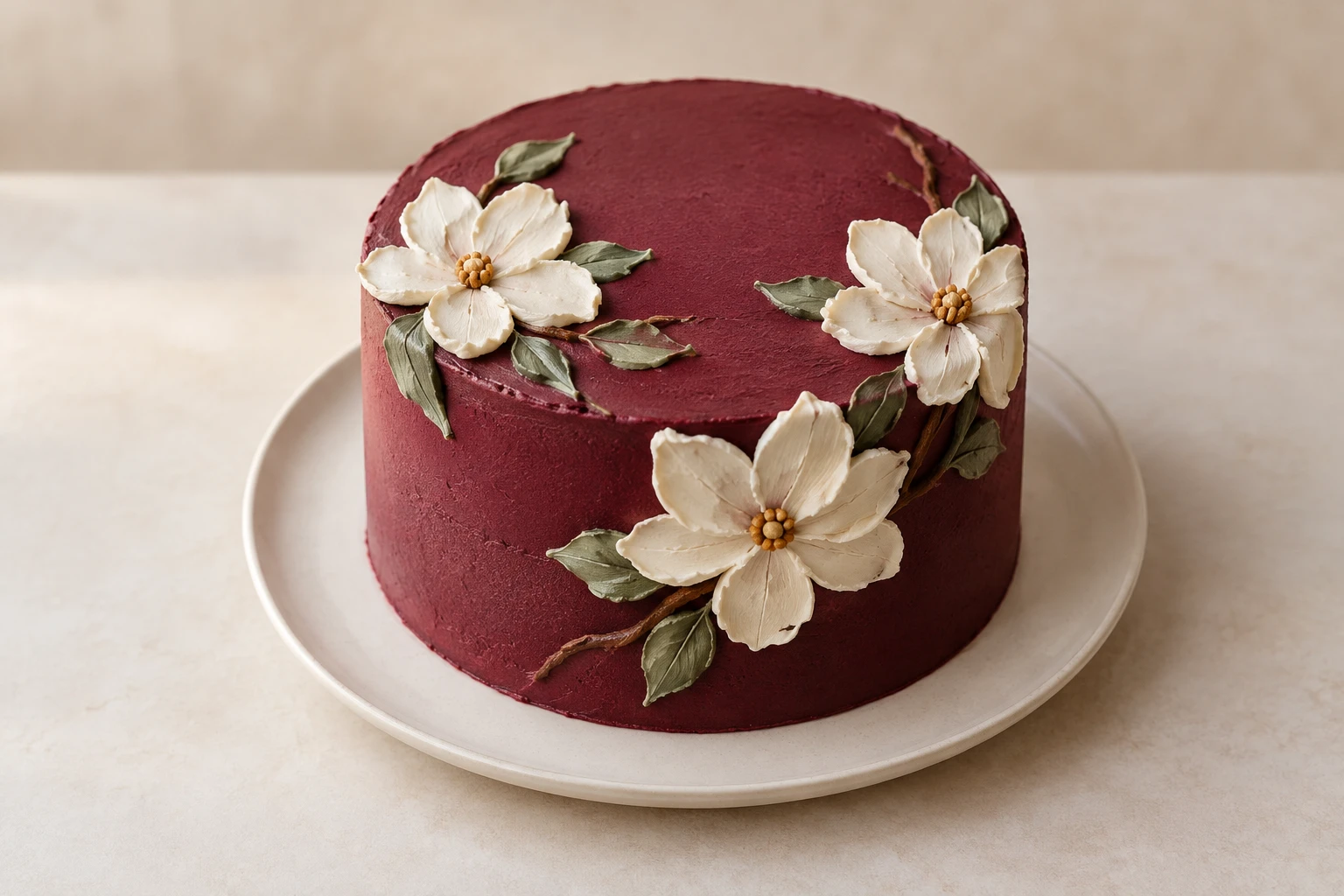
Make the chocolate base and white petals distinct
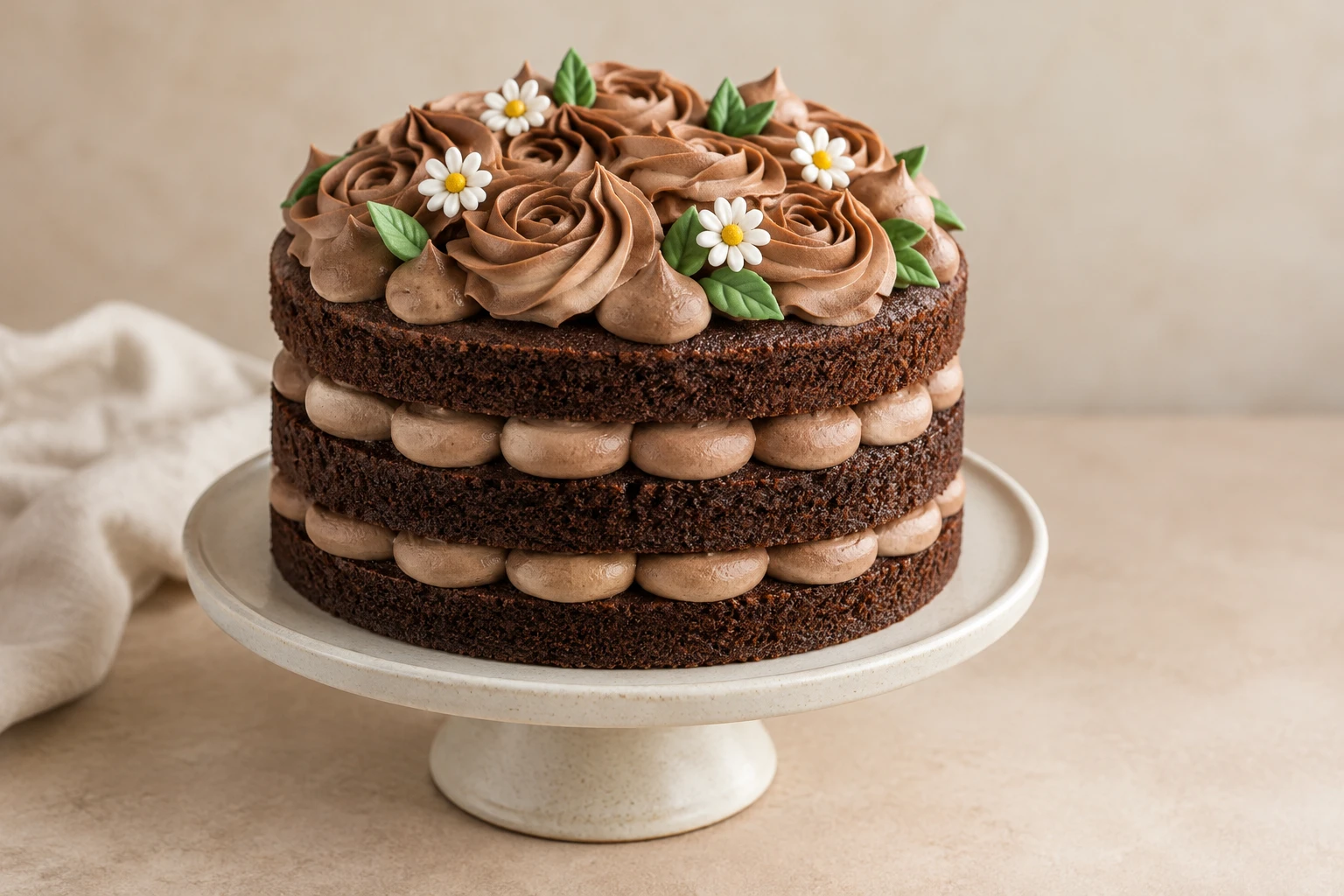
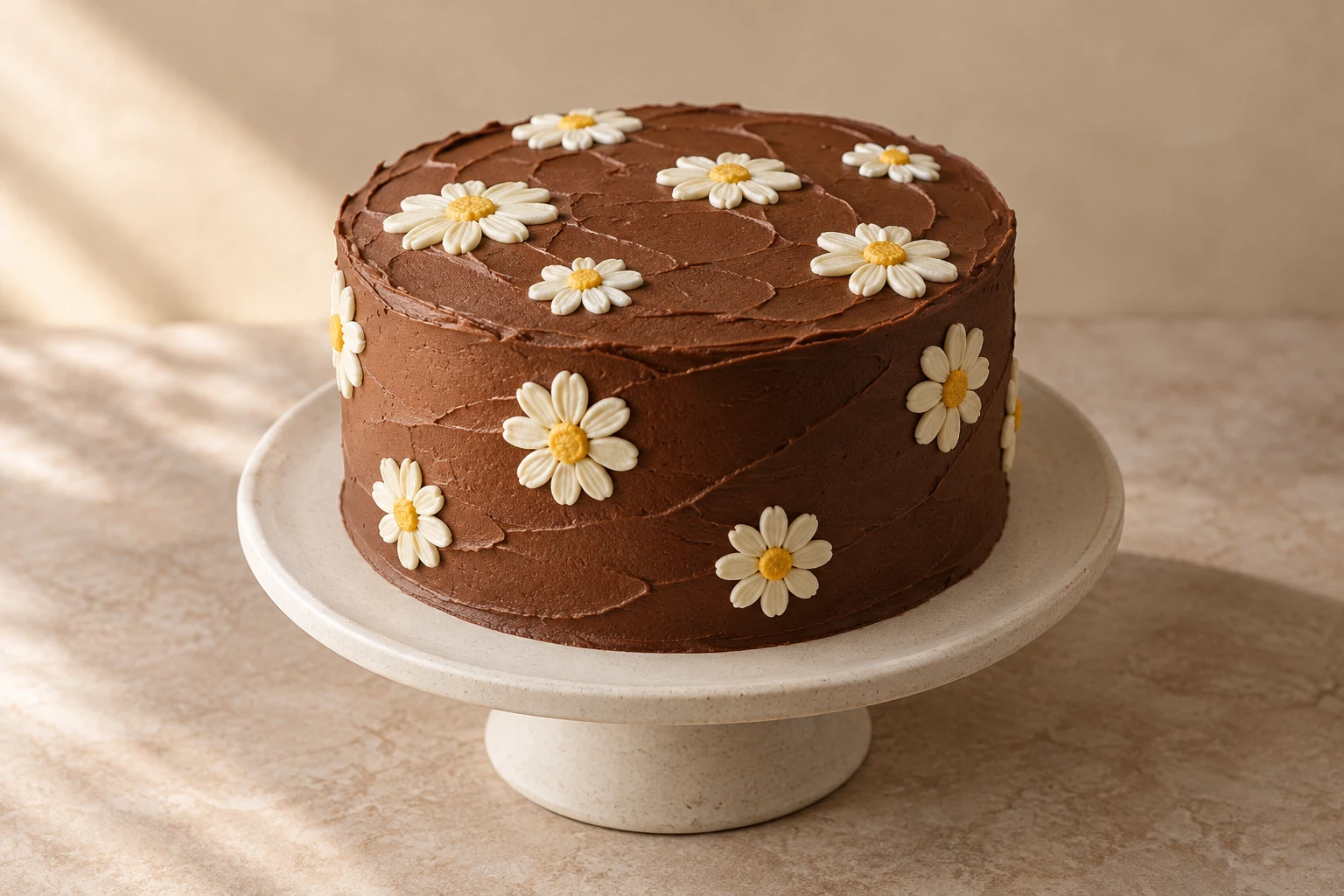
Use your trusted cake and cocoa buttercream, or labeled prepared piping buttercream. Divide the 750 g cocoa portion into 140 g filling, 100 g crumb coat, 440 g final coating and 70 g repairs. Use cocoa buttercream already formulated for a deep color rather than stirring an arbitrary quantity of dry cocoa into finished vanilla icing. Extra powder can make it dry and rough.
Reserve 100 g white and 20 g yellow buttercream for approximately twelve small daisies, including spares. White petals need a frosting that holds a ridge but extrudes without great force. Set these bowls aside with clean tools so cocoa traces cannot discolor them. The cake may be vanilla or chocolate; decoration color does not establish the sponge flavor.
Pipe daisies flat on parchment
Mark 1.5–2 cm circles on the underside of parchment squares. With a small petal tip, place the wide end near the center and pipe short petals outward, returning slightly inward as pressure stops. Rotate the square and repeat seven to nine times around the center. With a round tip instead, pipe short teardrop strokes from the outer end toward the middle.
Add a yellow dot to hide the joins. Keep each daisy shallow: thick heavy flowers are more likely to slide on the cake side. Chill or freeze on a flat tray until firm enough to lift without bending. Keep the flowers on parchment until placement; do not hold them in warm fingers. Make extra flowers so cracks do not need to be concealed.