 0 comments
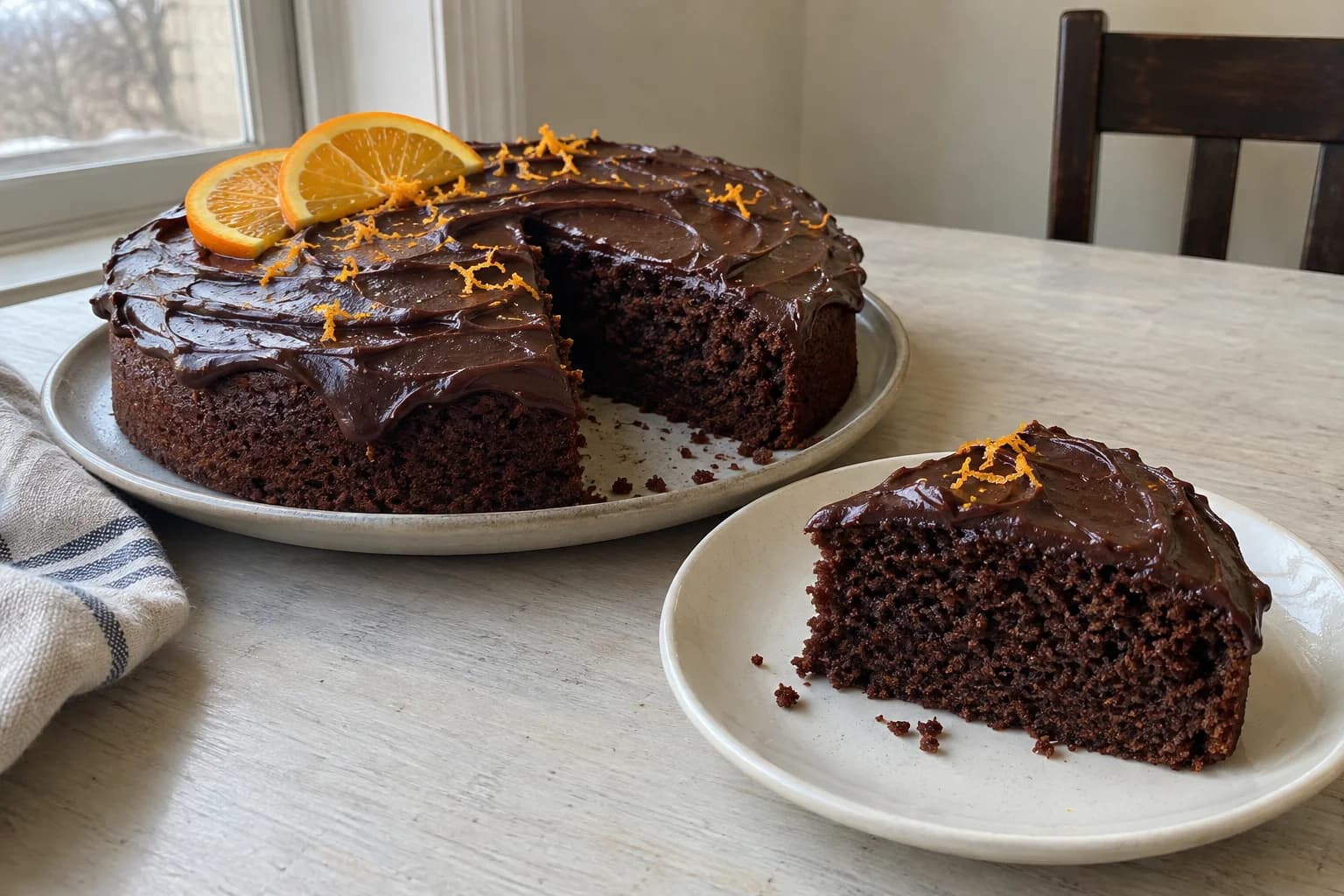
Chocolate orange cake does not need a tall stack or a perfectly smooth frosting coat. This version is one round cake, scented with fresh orange zest and finished with a thick layer of dark chocolate ganache. Oil and yogurt are used in the batter, and the decoration is made with the back of a spoon. The cut slice is the point: a close, chocolate crumb under a soft ganache cap. This is an original Kumora recipe draft, not yet kitchen-tested; use the doneness checks as well as the estimated baking time.
Before you start
- One 8-inch / 20-cm round metal cake pan, at least 2 inches / 5 cm deep
- Kitchen scale, parchment and cooling rack
- Two mixing bowls, whisk, sieve and flexible spatula
- Fine grater or zester and a citrus juicer
- Small saucepan, heatproof bowl and spoon or offset spatula
One layer, with the orange inside the cake
This batter is written for one 8-inch round pan. It is not intended to be divided into two full-height sandwich layers. A single round makes the baking and decorating straightforward, while the topping gives every slice a distinct chocolate finish.
Orange zest carries the clearest citrus aroma. Wash and dry the orange, then grate just its coloured outer skin before squeezing the juice. Stop when the white pith begins to show. The juice is measured separately; a large extra splash changes the balance of liquid and acidity.
Choose the cocoa and chocolate before you begin
Use unsweetened Dutch-process cocoa for the batter and a plain dark chocolate bar around 55 to 65 percent cocoa for the ganache. Drinking chocolate powder is not a substitute for cocoa because it commonly includes sugar and other ingredients. White chocolate and milk chocolate also need different ganache proportions.
Chop the dark chocolate into small pieces so the warm cream can melt it evenly. The topping here uses 150 g chocolate to 120 g cream for a soft, spreadable finish once cool. Chocolate brands and room temperature affect how quickly it thickens, so judge the texture rather than following a fixed setting time.
Mix a smooth batter without beating it for minutes
Rub the orange zest into the measured sugar with your fingertips until fragrant. Whisk the eggs, oil, yogurt, orange juice, milk and vanilla into this mixture. Sift the cocoa with the flour and raising agents so dry lumps are not hiding in the finished crumb.
Combine wet and dry ingredients only until no dry flour remains, scraping the base of the bowl. The batter should fall from the spatula in a broad ribbon. Pour it into the prepared pan promptly; there is no need to rest this batter or use an electric mixer.
Check the middle, not just the dark surface
Chocolate cake can look finished before its centre has set. Start checking around 35 minutes. The middle should spring back gently, and a skewer inserted into the cake should carry a few damp crumbs rather than shiny batter. If the centre still moves like liquid, continue baking in short intervals.
Let the cake stand in its pan for about 15 minutes before releasing it onto a rack. Cool it completely before topping. Warm cake softens the ganache and can turn an easy spoon finish into a pool around the plate.
Spread the ganache when it holds a soft trail
Heat the cream until steaming with small bubbles near the edge, pour it over the chopped chocolate and let it stand for a few minutes. Stir gently from the middle until smooth. If small chocolate pieces remain, warm the bowl briefly over barely simmering water, keeping water out of the mixture.
Wait until a spoon drawn through the ganache leaves a soft trail. Spoon it onto the cold cake and sweep it toward the edge in relaxed curves. Leave the sides mostly bare. A little fresh zest and two thin orange half-slices are enough decoration; pat the slices dry and add them close to serving.
Make ahead and keep the cut crumb covered
The unfrosted cake can be baked a day ahead. Cool it fully before wrapping so condensation does not collect against the crust. Make the ganache on the day you plan to decorate, or refrigerate it separately and gently soften it before spreading.
Keep the finished cake covered in the refrigerator and use within 3 days. Remove the fresh orange garnish before storing leftovers. Let slices lose some of their refrigerator chill before serving, and press food-safe wrap against an exposed cut surface to limit drying.
Single-Layer Chocolate Orange Ganache Cake
- Makes, at 1×
- 10 slices from one 8-inch / 20-cm cake
- Prep
- 30 min
- Baking
- 40 min
- Start to finish
- About 3 hr
Allow approximately 90 minutes to cool the cake and 20 minutes for the topping to settle; ganache cooling can overlap cake cooling.
Original recipe draft · not yet kitchen-tested. Baking times are estimates; use the doneness checks in the method.
Ingredients
Cake
Ganache
Finish
Let’s make it
- Heat the oven to 175°C / 350°F conventional, or 155°C fan. Lightly oil an 8-inch round metal pan and line its base with parchment.
- Sift the flour, cocoa, baking powder and baking soda into a bowl. Whisk in the salt. In a second bowl, rub the 2 tsp orange zest into the sugar with your fingertips.
- Whisk the eggs into the orange sugar, then whisk in the oil, yogurt, orange juice, milk and vanilla until evenly combined.
- Add the dry mixture to the wet mixture. Fold and whisk gently just until smooth, scraping the bottom of the bowl. Transfer to the pan and level the surface.
- Bake for approximately 35 to 43 minutes, checking from 35 minutes. The centre should spring back gently and a skewer should show damp crumbs but no wet batter. Give it a few more minutes if the centre remains loose.
- Cool in the pan for 15 minutes, then carefully turn out, remove the parchment and return the cake upright on a rack. Let it cool completely, approximately 90 minutes in total.
- While the cake cools, put the chopped chocolate in a heatproof bowl. Heat the cream until steaming with small bubbles at the edge. Pour over the chocolate, leave for 3 minutes, then stir gently from the centre until smooth.
- Let the ganache cool, stirring occasionally, until spreadable and able to hold a soft spoon trail. The waiting time varies with the room and chocolate. Keep it at room temperature while monitoring the texture.
- Set the cold cake on a serving plate. Spread the ganache over the top with a spoon, making broad swirls and leaving the sides mostly bare. Let the topping settle for about 20 minutes. Add the optional dry orange half-slices and extra zest shortly before serving.
Original Kumora recipe draft; not yet kitchen-tested. Times are estimates. The generated image illustrates the intended single-layer finish. Contains wheat, eggs and milk; check chocolate labels for additional allergens. Refrigerate covered and use within 3 days. This is a chocolate cake, not a dense flourless torte.
The little details
- Weigh the cocoa and flour; extra dry ingredients can make a small cake noticeably firmer.
- Do not pour hot ganache onto warm cake. Cool both to the appropriate stage before finishing.
- For clean slices, use a knife warmed under hot water, dry it, and wipe it between cuts.
Your questions, answered
Can I use bottled orange juice?
Unsweetened bottled juice can supply the measured liquid, but fresh zest is still needed for the citrus flavour. Do not replace the zest with extra juice.
Does this chocolate orange cake need an electric mixer?
No. The oil-based cake batter is mixed with a whisk and spatula. The ganache is stirred by hand.
Why is my ganache running off the cake?
It may still be too warm, or the cake may not be fully cool. Wait until the ganache holds a soft spoon trail, then spread it on the cold cake.
Can I make this in a 9-inch pan?
A 9-inch pan makes a thinner cake and changes the baking time. This draft is written for an 8-inch pan; start assessing doneness earlier if changing the pan size.
Made it? Let’s talk.
Share how your bake went, ask a question, or pass on a helpful tip. There’s a seat for you here.
A kind kitchen is a happy kitchen. Our community guidelines →
No comments yet. Be the first to say hello.