 0 comments
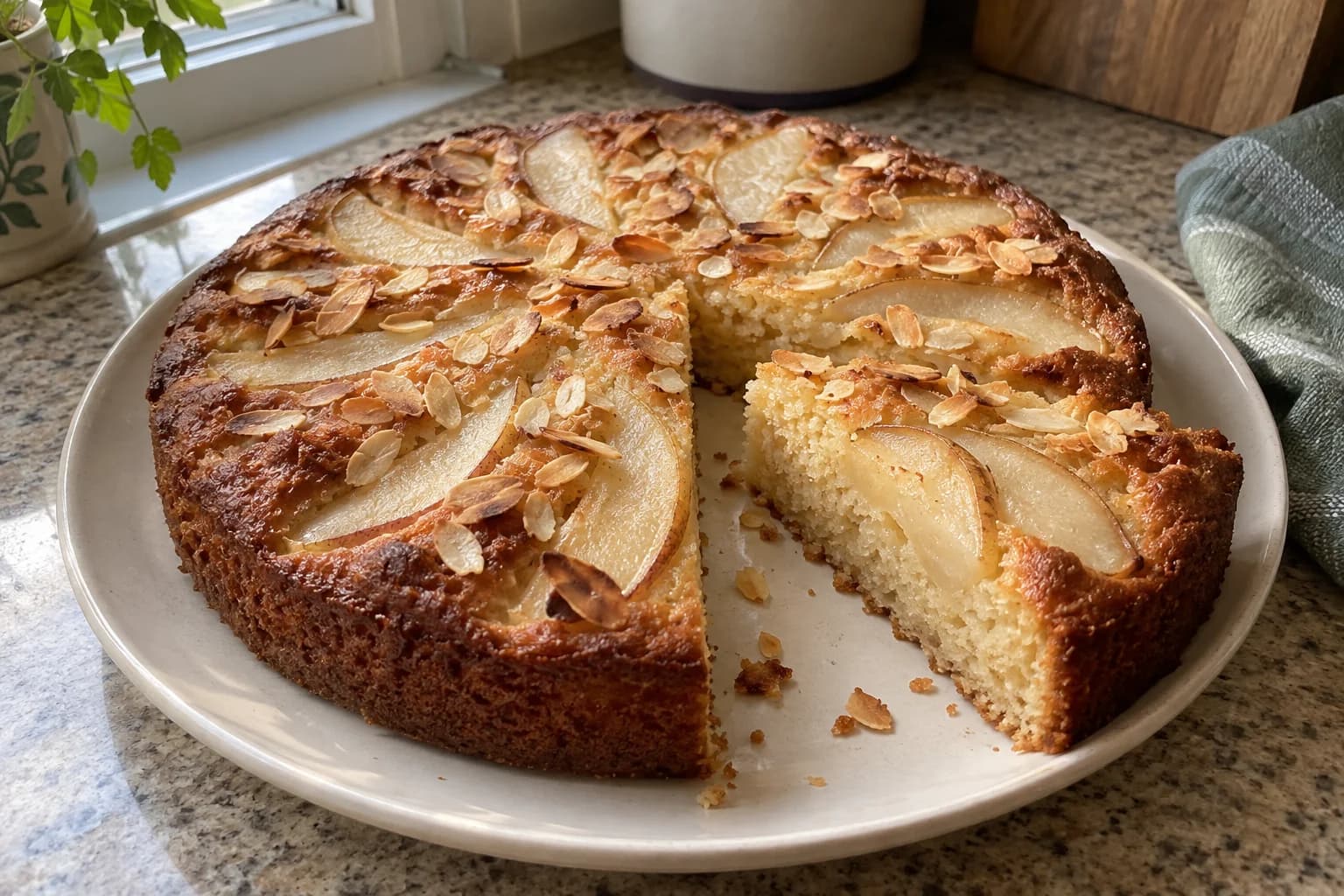
Pear almond cake makes its own decoration in the oven. Thin pear wedges settle into the surface, flaked almonds toast around them, and the golden cake needs no frosting once cool. This version uses both wheat flour and ground almonds for a soft, sliceable crumb. It is a one-layer cake for an afternoon table or a relaxed dessert, with the fruit kept on top rather than hidden in a heavy filling. This is an original Kumora recipe draft, not yet kitchen-tested; pear ripeness and moisture make the doneness checks especially useful.
Before you start
- One 9-inch / 23-cm round metal cake pan, at least 2 inches / 5 cm deep; a springform pan is convenient
- Kitchen scale, parchment and cooling rack
- Electric mixer, mixing bowl and flexible spatula
- Sharp knife, peeler and chopping board
- Fine grater for the lemon zest
Use ripe pears that still hold their shape
Choose pears that give slightly near the stem but are firm enough to cut cleanly. Very hard pears can stay unpleasantly firm after the cake is baked; overripe ones can collapse and release more liquid than this batter is designed to hold. Conference, Bosc or a similarly firm eating pear is a useful starting point.
The ingredient weight is 300 g after peeling and coring. Weigh the prepared fruit rather than relying only on a count of pears, since their sizes vary. Cut twelve fairly thin wedges, around 5 to 8 mm thick at the thickest part, and pat away excess surface juice. Do not soak them in syrup.
Ground almonds and flour do different jobs
Use finely ground blanched almonds or almond flour, with all-purpose wheat flour alongside them. The almonds contribute flavour and a softer crumb, while the wheat flour helps the cake hold together around the fruit. Coarse chopped almonds cannot replace the ground almonds in the batter.
This recipe is not gluten-free. Replacing all the wheat flour with more almonds would change the structure, fat content and moisture balance. A dedicated gluten-free formula would be a better starting point than that substitution.
Build the batter before arranging the fruit
Cream the softened butter and sugar, then add the eggs gradually. Fold in the dry mixture, yogurt, vanilla and lemon zest without continuing to beat once the flour is incorporated. The mixture will be thick enough to spread rather than pour like a thin pancake batter.
Transfer the batter to the prepared pan and level it gently. Put the pear wedges on top in a loose radial arrangement, leaving a little batter visible between them. Press them only lightly into the surface. The batter rises around the fruit, so there is no need to bury it.
Let the cake, rather than a pear, guide the skewer test
Start checking around 40 minutes. Aim a skewer into a patch of cake near the centre, avoiding a pear wedge: cooked pear will stay moist even when the cake around it is done. Look for set batter with a few moist crumbs and a centre that no longer wobbles.
Flaked almonds colour quickly. If the top is already golden but the cake still needs time, loosely cover it with foil and continue checking. Place the foil gently so it does not stick to wet batter. A deeply browned rim does not prove that the centre is ready.
Cool before moving or cutting
A warm almond cake is fragile, particularly where fruit interrupts the crumb. Let it stand in its pan for about 20 minutes before loosening the edge. If using a springform pan, remove the ring and finish cooling on the base before sliding the cake onto a plate.
With a standard pan, allow the cake to become firmer before carefully turning it out and returning it upright; support the top with a flat plate. Slice only when cool or barely warm. A few crumbs are normal, but cutting it hot can turn a neat wedge into a spoon dessert.
Serve simply and refrigerate the leftovers
The pear pattern and toasted almonds are the finish. A spoonful of plain yogurt or lightly whipped cream can be served alongside, but neither is needed in the recipe. Avoid adding a thick icing that hides the fruit and makes the cake harder to slice neatly.
Once fully cool, cover the cake and refrigerate for up to 3 days. Let slices stand briefly before serving. The fruit moistens the surrounding crumb during storage, so this cake is best enjoyed early rather than kept for a week on the counter. Freeze individual well-wrapped slices for up to a month if needed.
Pear Almond Cake with Flaked Almonds
- Makes, at 1×
- 10 slices from one 9-inch / 23-cm cake
- Prep
- 25 min
- Baking
- 45 min
- Start to finish
- About 2 hr 10 min
Allow about 60 minutes for cooling, including 20 minutes in the pan, before moving and slicing the cake.
Original recipe draft · not yet kitchen-tested. Baking times are estimates; use the doneness checks in the method.
Ingredients
Cake
Top
Let’s make it
- Heat the oven to 175°C / 350°F conventional, or 155°C fan. Grease a 9-inch round metal pan and line the base with parchment. A springform pan makes unmoulding easier.
- Peel and core the pears, then weigh 300 g prepared fruit. Cut into twelve fairly thin wedges and pat away excess juice. Whisk the flour, ground almonds, baking powder and salt together in a separate bowl.
- Beat the softened butter and sugar for 3 to 4 minutes until lighter and airy, scraping down the bowl. Lightly beat the eggs and add them gradually while mixing. If the mixture starts to split, add a spoonful of the measured dry ingredients.
- Fold in half the remaining dry mixture, then the yogurt, vanilla and lemon zest, followed by the rest of the dry mixture. Stop when evenly combined and scrape the bottom of the bowl.
- Spread the batter in the prepared pan. Arrange the pear wedges on top in a loose radial pattern, leaving some batter visible, and press them down only slightly. Scatter the flaked almonds between and over the wedges.
- Bake for approximately 40 to 50 minutes, checking from 40 minutes. A skewer inserted into cake near the centre, avoiding a pear wedge, should carry moist crumbs but no raw batter. The centre should not wobble. Loosely cover with foil if the almonds brown before the centre is ready.
- Cool in the pan for 20 minutes. Loosen the edge and, if using a springform pan, remove its ring. Let the cake cool for roughly 40 minutes more before carefully transferring it to a serving plate. With a standard pan, allow it to firm up before turning out and returning it upright.
- Slice when cool or barely warm. No frosting is needed. Once completely cool, cover leftovers and refrigerate for up to 3 days; let slices lose their chill briefly before serving.
Original Kumora recipe draft; not yet kitchen-tested. Pear ripeness affects the bake, so use the centre checks. Contains almonds, wheat, eggs and milk. The generated image illustrates a single cake layer with fruit on top, not a pastry tart. Refrigerate covered and use within 3 days.
The little details
- Weigh pears after peeling and coring so fruit moisture stays close to the intended amount.
- Test the cake between the pear wedges; a skewer pushed through fruit is not a reliable batter check.
- Do not cut the cake straight from the oven. Give the almond crumb time to firm up.
Your questions, answered
Is pear almond cake gluten-free?
This version is not: it includes all-purpose wheat flour as well as ground almonds. It has not been tested with gluten-free substitutions.
Can I use canned pears?
The draft uses fresh pears. Canned fruit has a different moisture level; drain and blot it thoroughly if experimenting, but no tested direct substitution is provided.
Should the pear wedges sink into the cake?
Some settling is expected as the batter rises around them. Arrange the wedges on the surface and press only lightly, leaving gaps where the cake can show through.
Does this cake need frosting?
No. Pear wedges and flaked almonds create the finished top during baking. Serve it plain or with cream or yogurt on the side.
Made it? Let’s talk.
Share how your bake went, ask a question, or pass on a helpful tip. There’s a seat for you here.
A kind kitchen is a happy kitchen. Our community guidelines →
No comments yet. Be the first to say hello.