A little sweeter, togetherAll collectionsTechnique collection
Palette knife cakes
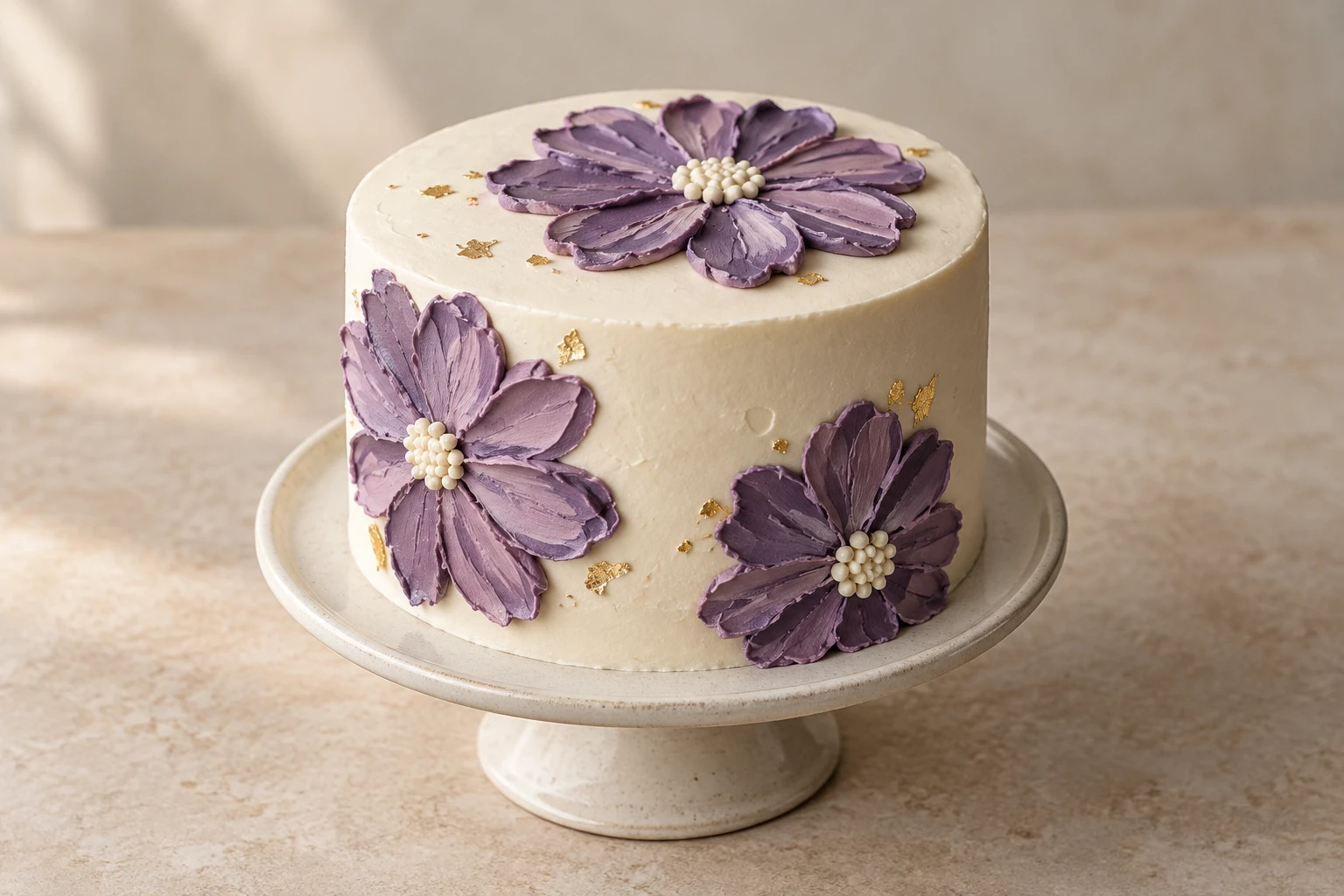
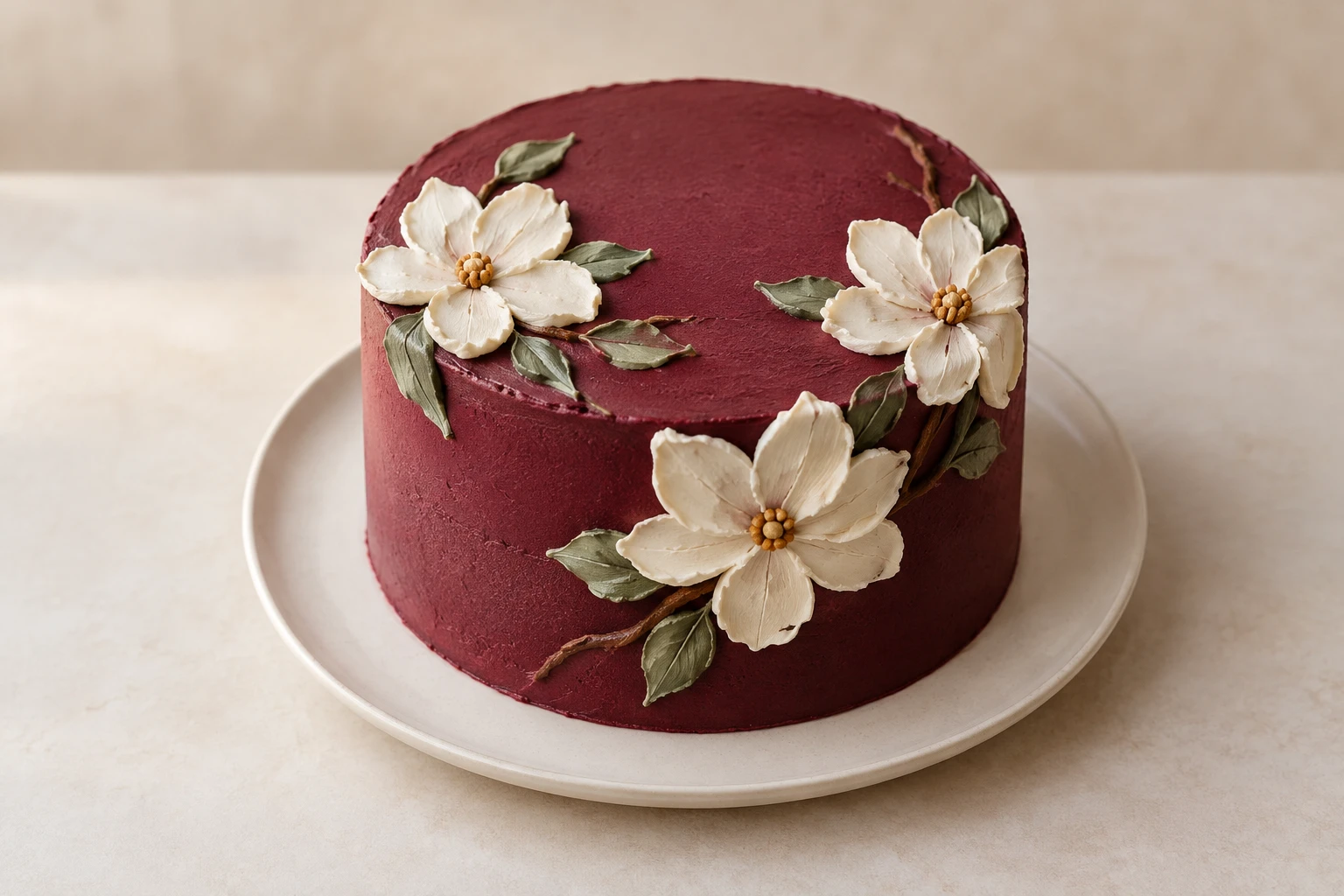
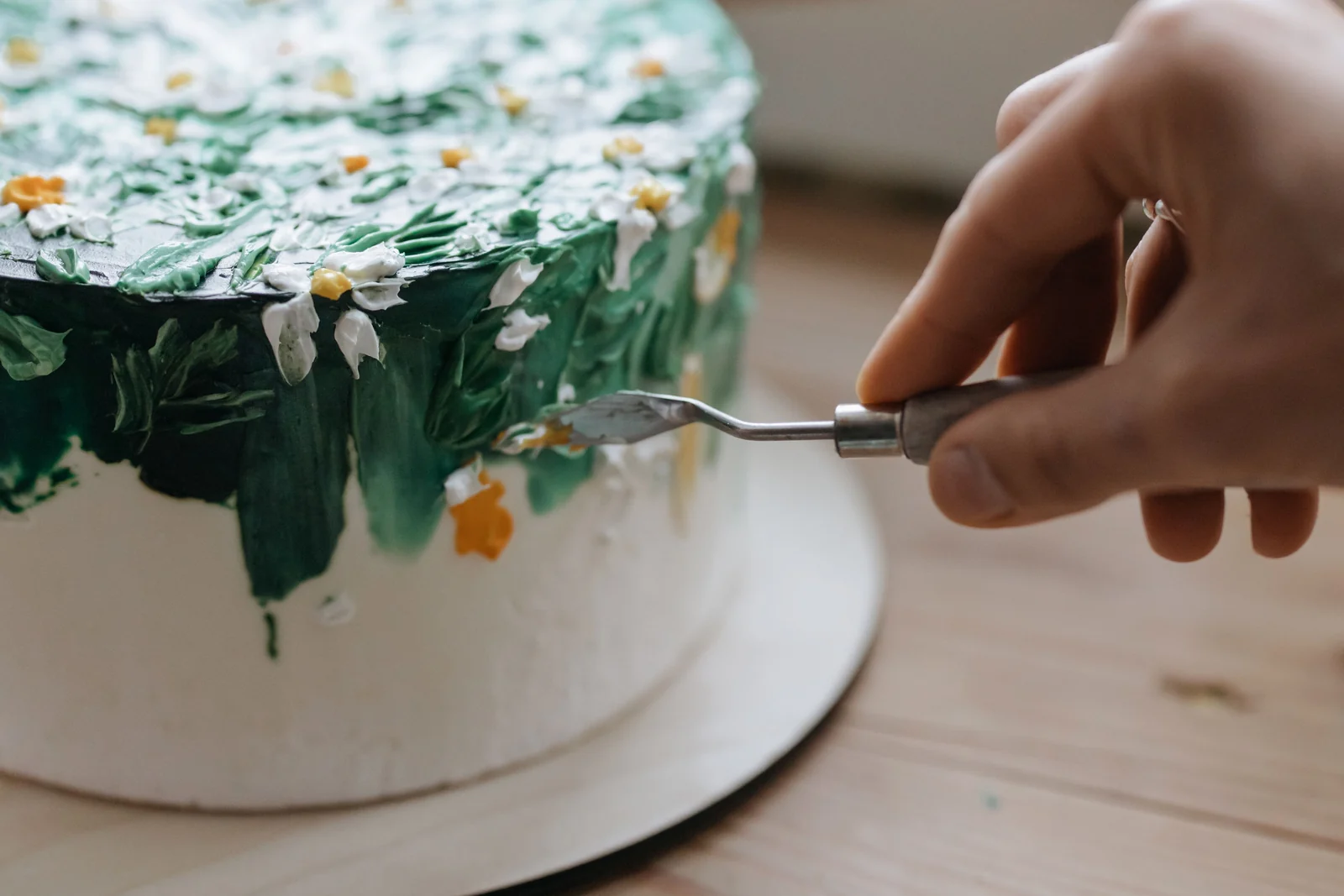
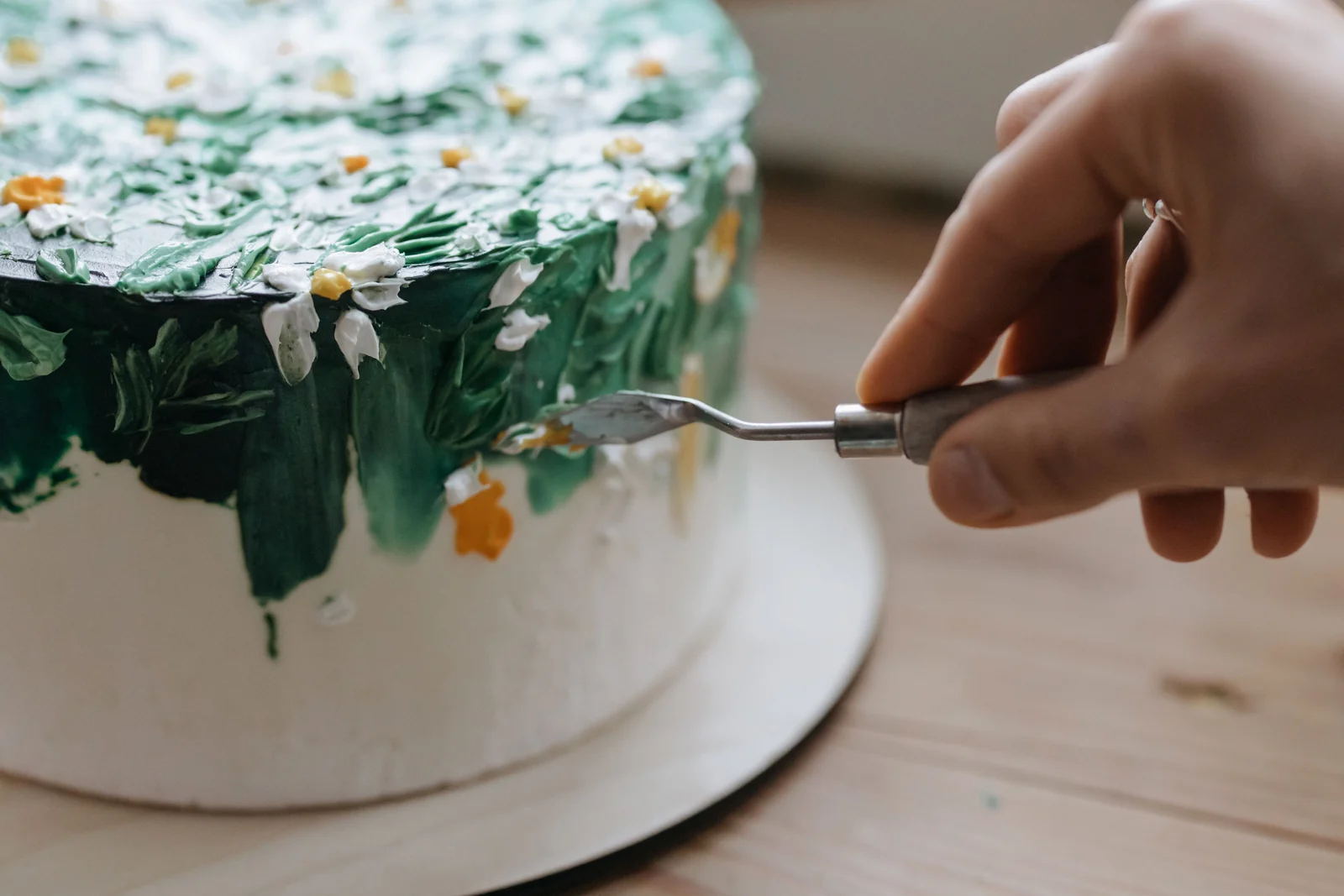
Palette knife decorating treats buttercream like thick paint. Instead of piping, you load a small knife, press and drag, building petals, leaves or textured strokes with very little equipment.
These guides explain how firm the buttercream should be, how to load two colours at once, and how to practise strokes on parchment before committing to the cake.
8 guidesGood to know
Three things that help
Use a small offset palette knife and cool, firm buttercream; soft frosting smears instead of forming petals.
Load the knife with two colours side by side to get shaded petals in a single stroke.
Practise strokes on parchment first, and wipe the knife clean every few petals.
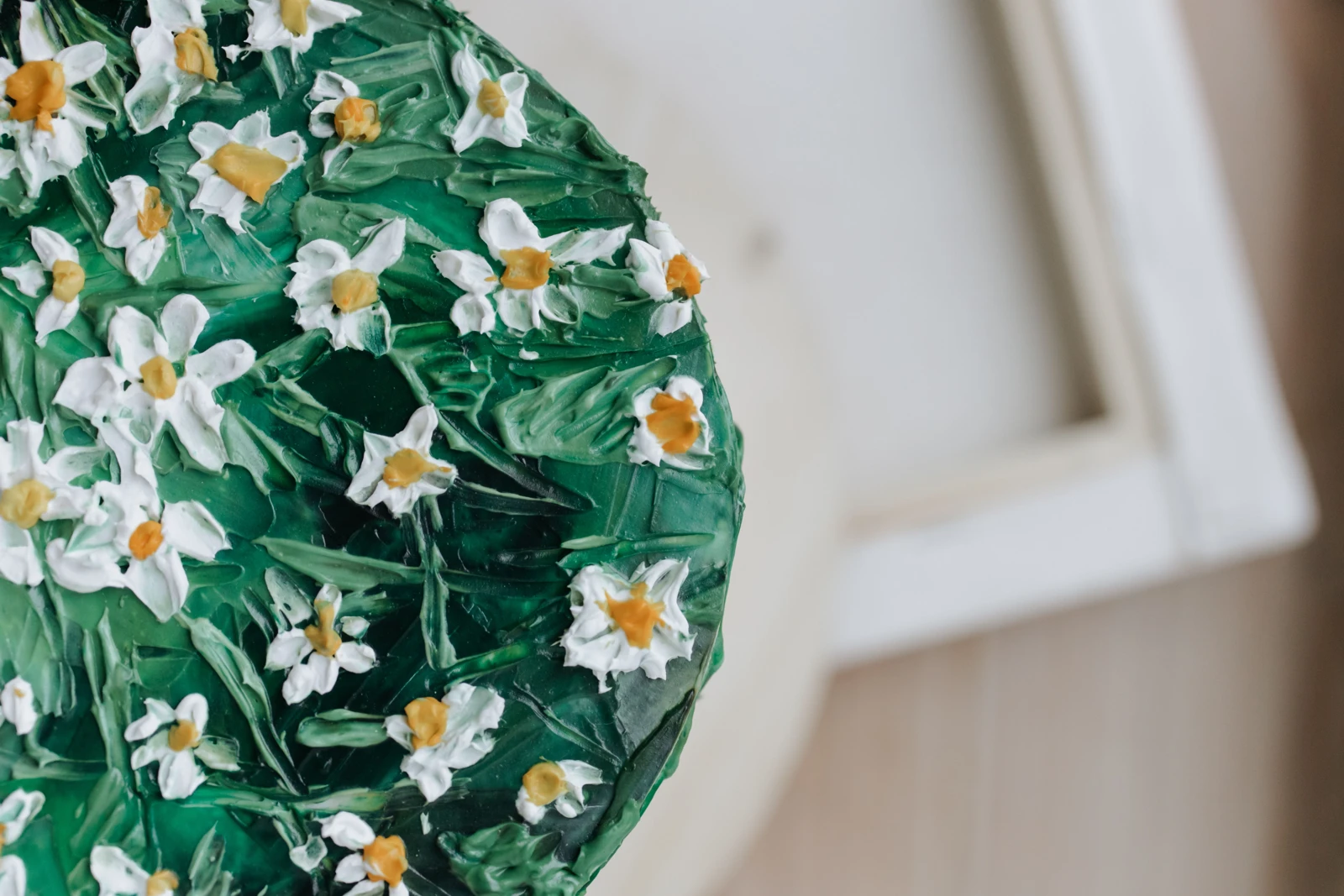
A green meadow cake begins with overlapping leaves, then small white daisies. Follow the layer order, practice the palette-knife movement and repair smudges without covering every detail.
Inside: Plan three layers of decoration · Chill the base; soften the detail frosting · Lay down the leaves first
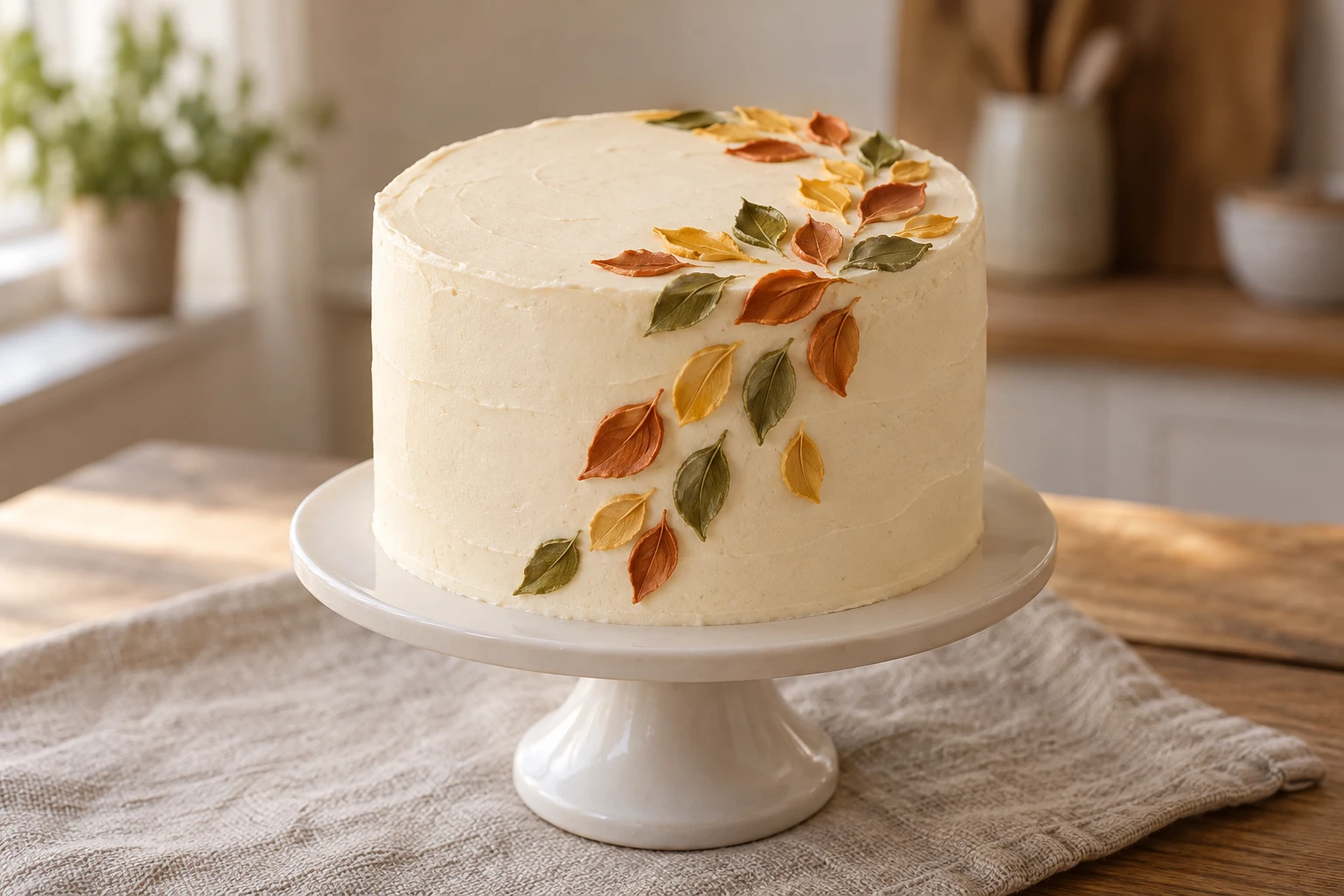
Decorate a small ivory cake with rust, mustard and olive buttercream leaves. Learn a simple press-and-lift swipe, a loose crescent layout and repairs for leaves that smear.
Inside: Choose a cake and plan the leaf crescent · Make egg-free buttercream and split the colors · Coat, chill and check the surface
Decorate a lemon cake with pink and lavender buttercream brushstrokes, tiny flowers and a piped bow. Learn frosting consistency, color placement and easy repairs.
Inside: Keep the cake bright, but the colors quiet · Find the buttercream sweet spot · Build a balanced patchwork