 0 comments
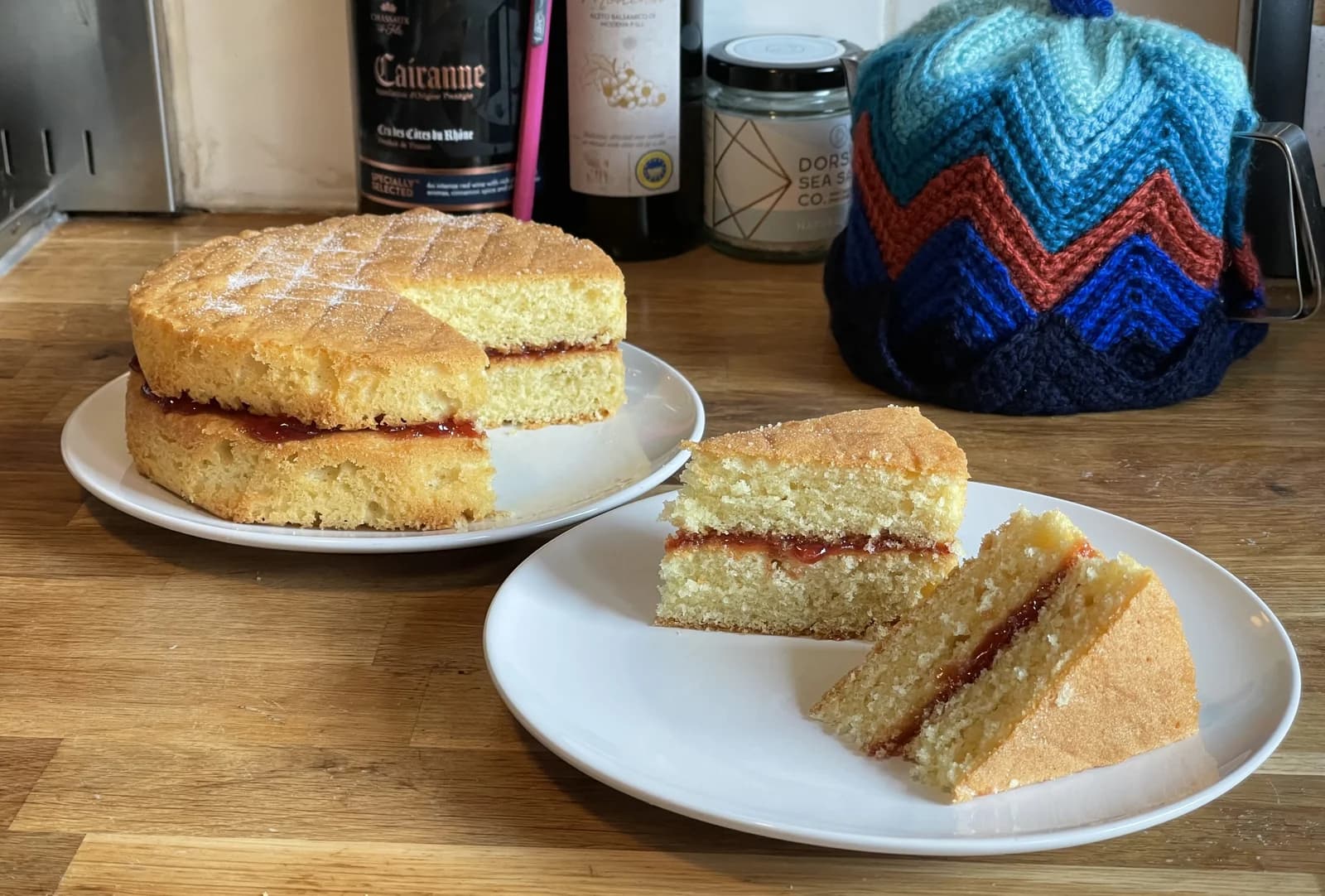
Understand egg foam, gentle folding and cooling, with practical checks for a dense or sunken sponge. This Kumora guide interprets the reference image; it does not claim to reproduce the original creator’s recipe or methods.
Before you start
- A tested sponge recipe and its specified pan
- Digital scale and oven thermometer
- Large bowl, whisk or electric mixer
- Wide flexible spatula and cooling rack
Choose the right starting recipe
The soft slice in this reference does not reveal whether the cake is a whole-egg sponge, chiffon or another style. Choose a tested formula before shopping. This is a texture and technique guide, not the source baker’s recipe. Keep the specified pan size and flour unchanged on your first attempt.
Prepare the pan and preheat the oven before mixing. A finished egg foam should not sit waiting while you cut parchment or search for equipment. Weigh the ingredients and arrange them in the order the recipe uses them.
Watch the foam, not only the clock
Whole-egg sponge recipes often ask you to whisk eggs and sugar until pale and thick. When the whisk is lifted, a trail briefly rests on the surface before blending back in. That visual cue is more useful than blindly copying a mixing time from different equipment.
Hand whisking can be possible but requires sustained effort. Do not assume every sponge is a no-mixer recipe. A formula using separated eggs has a different whipping sequence: follow its instructions for the whites rather than substituting the whole-egg method.
Fold all the way to the bottom
Add the dry ingredients as directed in manageable portions. Cut a broad spatula through the center, sweep along the bottom and lift batter over itself while rotating the bowl. Look for hidden flour pockets before stopping. Aim for even batter while preserving its air.
Follow the recipe carefully when adding melted fat or liquid. A heavy addition can settle into the foam and leave a dense layer. Do not improvise extra milk merely because the batter looks thicker than expected.
Diagnose one variable at a time
Check doneness near the recipe’s stated time and follow its cooling instructions. Some foam cakes need their pan support while cooling; others are unmolded. Slice only once the cake has cooled enough that the knife will not compress the crumb.
For a gummy bottom, investigate folding, liquid incorporation and doneness. For a dry cake, check flour measurement and overbaking. Record the pan, oven setting and bake time so the next attempt changes one variable rather than several.
The little details
- Judge a cooled slice instead of squeezing the whole cake.
- A deeper pan changes baking behavior even if its diameter matches.
Your questions, answered
Is this a no-mixer recipe?
This is a technique guide without a formula. Choose a tested recipe specifically written for hand mixing if you do not have a mixer.
Why did the center sink?
An unset center, lost egg foam or a pan mismatch can all contribute. Compare the process with your chosen recipe before changing ingredients.
Made it? Let’s talk.
Share how your bake went, ask a question, or pass on a helpful tip. There’s a seat for you here.
A kind kitchen is a happy kitchen. Our community guidelines →
No comments yet. Be the first to say hello.