 0 comments
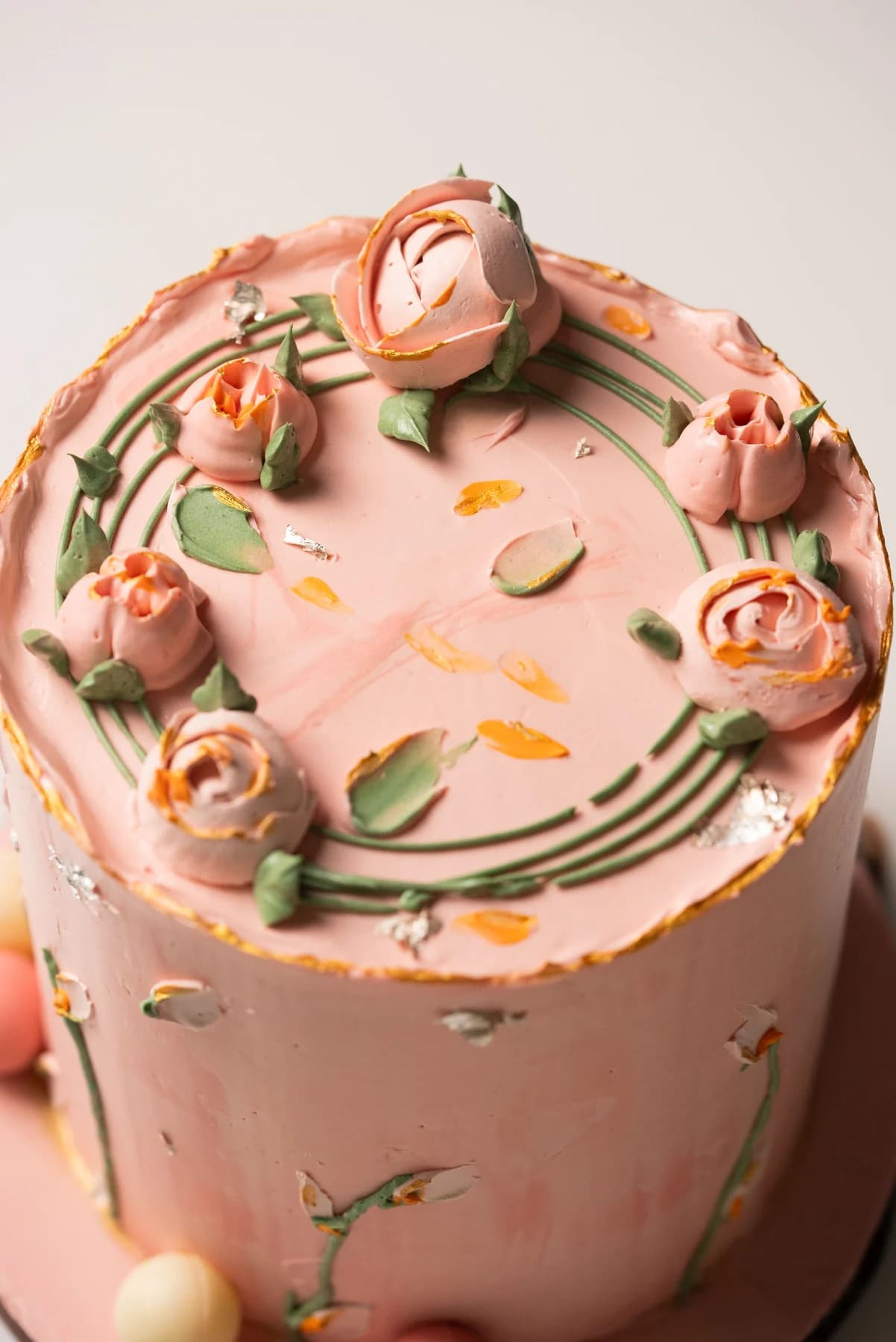
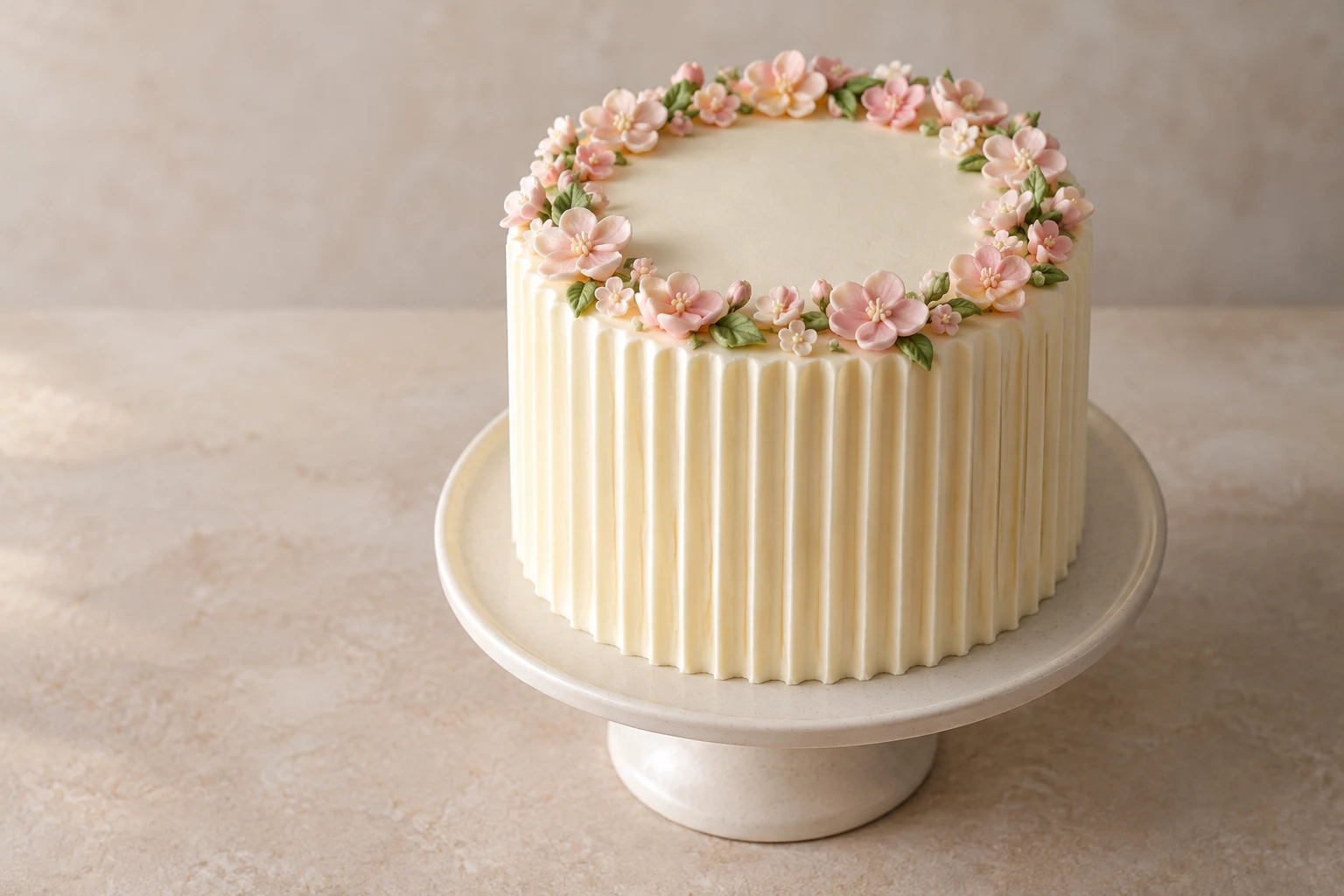
The reference surrounds a low ivory cake with delicate pink and white roses. This edible version uses buttercream flowers instead of fresh stems, with a softly pleated border around the sides. The cake itself stays simple: two vanilla layers with a very subtle, optional rosewater note in the frosting.
An original Kumora recipe inspired by the linked cake design. The linked reference is decorating inspiration, not evidence of a kitchen-tested result from this recipe. The cover is identified in its caption.
Before you start
- Digital kitchen scale
- Electric hand mixer or stand mixer
- Mixing bowls, silicone spatula and cooling rack
- Offset spatula, cake board and turntable
- Piping bags and parchment paper
- Two 8-inch round pans
- Petal tip, flower nail and parchment squares
- Small leaf tip, open-star tip and small flat piping tip
Choose between roses and rosettes
A petal-tip rose has individual overlapping petals. Pipe a small cone in the center of a parchment square on a flower nail, then wrap the first petal around it. Add three petals around that center and five around the next ring.
If that technique is new, use an open-star tip to pipe flat rosettes directly on the cake. Start in the center, spiral once around and release pressure. It gives the same garden mood with much less practice.
Make the flowers before coating the cake
Pipe a mixture of blush pink and ivory flowers onto parchment squares. Freeze for 15–20 minutes until firm enough to lift. Making a few extras lets you choose the best shapes without working against a freshly frosted cake.
The frosting for flowers should hold a sharp edge. Set aside the flower portion before adding extra cream to soften the coating buttercream. Too much liquid makes petals fold over.
Pipe soft pleats around the sides
Cover the cake with a thin, smooth base coat. Hold a small flat tip close to the side and pipe a vertical strip from bottom to top, using a gentle side-to-side movement. Repeat next to it, slightly overlapping the edges.
You can also use a small offset spatula to pull vertical strokes through a thicker coat of frosting. The effect is softer, but it avoids buying another tip.
Assemble a loose flower border
Set the largest roses at intervals around the top rim, then add smaller flowers between them. Attach cold flowers with a dab of buttercream. Pipe a few short green leaves into the gaps rather than filling every space.
Refrigerate the finished cake in a covered box for up to 3 days. For transport, chill until firm and keep the cake board flat; the delicate petals are the first part to soften in warm conditions.
Vanilla buttercream rose garden cake
- Makes, at 1×
- One 8-inch, two-layer cake; 16 slices
- Prep
- 1 hr 40 min
- Baking
- 35 min
- Start to finish
- About 4 hr 20 min
Allow for sponge cooling, a crumb-coat chill and 20 minutes to firm the piped flowers.
Original recipe draft · not yet kitchen-tested. Baking times are estimates; use the doneness checks in the method.
Ingredients
Cake
Buttercream
Decoration
Let’s make it
- Heat the oven to 175°C / 350°F conventional (155°C fan). Grease two 8-inch round cake pans, line their bases with parchment, and set them on the middle rack when baking. Whisk the flour, baking powder and salt together.
- Beat the cake butter and sugar for 3–4 minutes until noticeably lighter. Beat in the eggs one at a time, scraping the bowl between additions. Add the vanilla.
- On low speed, add the flour mixture in three additions, alternating with the milk in two additions. Stop when the last streaks of flour disappear; do not keep beating.
- Divide evenly between the prepared pans and level. Bake for 30–35 minutes, checking toward the early end. The centers should spring back lightly and a skewer should emerge without wet batter. Cool in the pans for 15 minutes, then turn onto racks and cool completely.
- Beat the buttercream butter for 4 minutes. Add the sifted icing sugar in four additions on low speed. Add cream, vanilla and salt; beat until smooth, then mix on low for 2 minutes to reduce air pockets. If using rosewater, add just 1 g and taste. Reserve about 300 g frosting for flowers and leaves.
- Tint part of the reserved frosting blush pink and a small amount green. Pipe pink and ivory roses on parchment squares using a flower nail and petal tip, or plan to pipe rosettes directly on the cake. Freeze separate flowers for 15–20 minutes.
- Level the cakes and sandwich with about 220 g buttercream. Crumb-coat and chill for 20 minutes. Add a smooth coat to the top and a slightly thicker coat to the sides.
- Pipe overlapping vertical pleats around the sides with a flat tip, or pull vertical strokes through the frosting with a small spatula. Keep the top rim clean.
- Lift firm flowers from their parchment and attach around the top edge using tiny dabs of buttercream. Add small green leaves between clusters. Use remaining frosting for a narrow border at the base if desired.
- Refrigerate until stable. Before serving, allow only the needed portions to soften slightly at room temperature.
Contains wheat, eggs and milk. Rosewater strengths vary greatly; it is optional and should remain subtle. All flowers in this adaptation are piped buttercream, even though the source design appears to use real flowers.
The little details
- Use rosewater made for food, not perfume or cosmetic rosewater.
- Start with the smallest amount of rosewater and taste before adding more.
- Keep the central top area simple so the flower border stands out.
Your questions, answered
Can I use real roses instead?
This recipe uses edible buttercream roses. If using real flowers, verify the species and food-safe growing conditions with a supplier and keep stems isolated from the cake; florist flowers are not automatically suitable.
Why do my petals keep falling over?
The frosting may be warm or too soft. Chill it briefly, use a smaller bag so hand heat has less effect, and avoid adding more cream to the flower portion.
Can I make the buttercream flowers ahead?
Pipe and freeze them on parchment, then keep them protected in a sealed container. Transfer them while firm and attach with fresh buttercream.
Made it? Let’s talk.
Share how your bake went, ask a question, or pass on a helpful tip. There’s a seat for you here.
A kind kitchen is a happy kitchen. Our community guidelines →
No comments yet. Be the first to say hello.