 0 comments
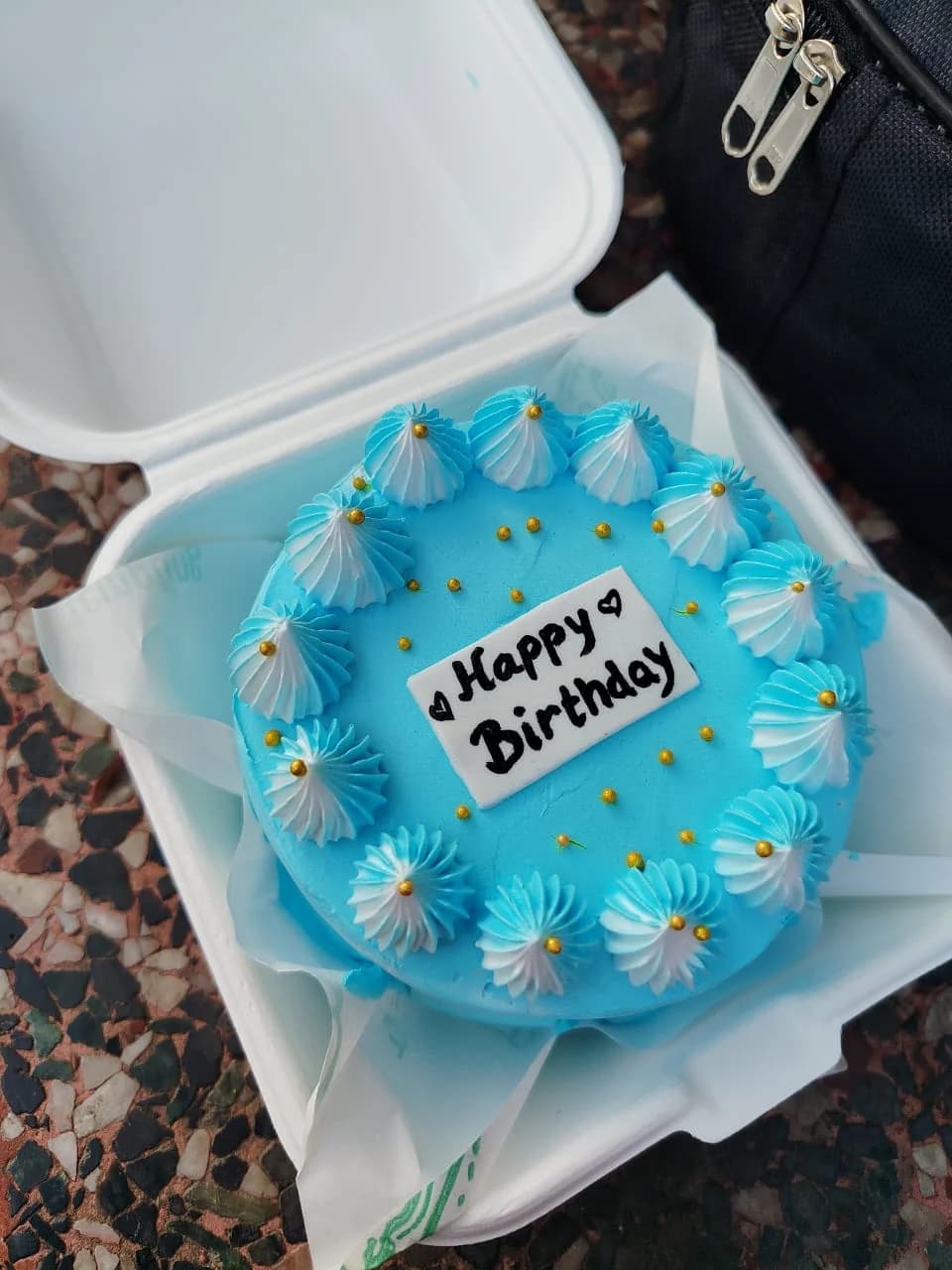
Arrange small white geese around a blue pond-inspired cake, with simple edible shapes and a manageable low-profile layout. This Kumora guide interprets the reference image; it does not claim to reproduce the original creator’s recipe or methods.
Before you start
- Stable round cake with a blue frosting coat
- Two or three related blue buttercream shades
- White and orange edible modeling material
- Small palette knife
- Paper circles or markers for planning figure positions
Plan a small flock
The reference uses repeated white goose shapes around the rim and sides. Make a layout with a few figures first rather than starting with a crowded flock. Leave an open section for the greeting and a clear place to cut the first slice.
Use a stable cake height and avoid putting the largest figures near an unsupported edge. A simpler version can keep all geese on top, with only piped water texture on the sides. Repetition creates the theme; you do not need many different poses.
Build the pond texture
Apply a firm blue base coat, then add thin patches of lighter and darker blue with a palette knife. Let the colors overlap slightly without blending into one uniform shade. Short curved strokes suggest water more naturally than long vertical stripes.
Keep the heaviest texture away from the places where figures will sit. A smooth small landing spot gives each goose a stable attachment area. Check the side finish before adding figures because repairs become harder afterward.
Make compact edible geese
Shape small white bodies with broad bases, short necks and modest heads. Add tiny orange beaks and minimal eye details. Let the material firm according to its instructions before transferring. Very long thin necks are harder to support and more likely to break.
For side decorations, use flat goose-shaped plaques rather than heavy projecting models. Do not depend on a soft frosting coat to carry a large figure. Keep any support system purpose-made for food use, identifiable and removable before serving.
Arrange with breathing room
Start with the largest goose, then place smaller ones in uneven groups. Turn some slightly inward to connect them visually. Keep several stretches of blue visible so the flock appears to be on water rather than on a solid white crown.
Add any final ripples after positioning the figures. Carry delicate models separately if needed and attach at the destination. This is a decorating interpretation of the reference, not the original baker’s recipe; use your trusted cake and filling.
The little details
- Two simple goose poses are enough to create variety in a small flock.
- A restrained orange accent makes the white figures readable against blue.
Your questions, answered
Can I use ducks instead?
Yes. Shorter necks and broader beaks change the silhouette. Keep the same blue base and spacing plan.
How can a beginner simplify it?
Use three small flat goose plaques on top and skip the side figures. The pond texture and repeated white shapes still communicate the theme.
Made it? Let’s talk.
Share how your bake went, ask a question, or pass on a helpful tip. There’s a seat for you here.
A kind kitchen is a happy kitchen. Our community guidelines →
No comments yet. Be the first to say hello.