 0 comments
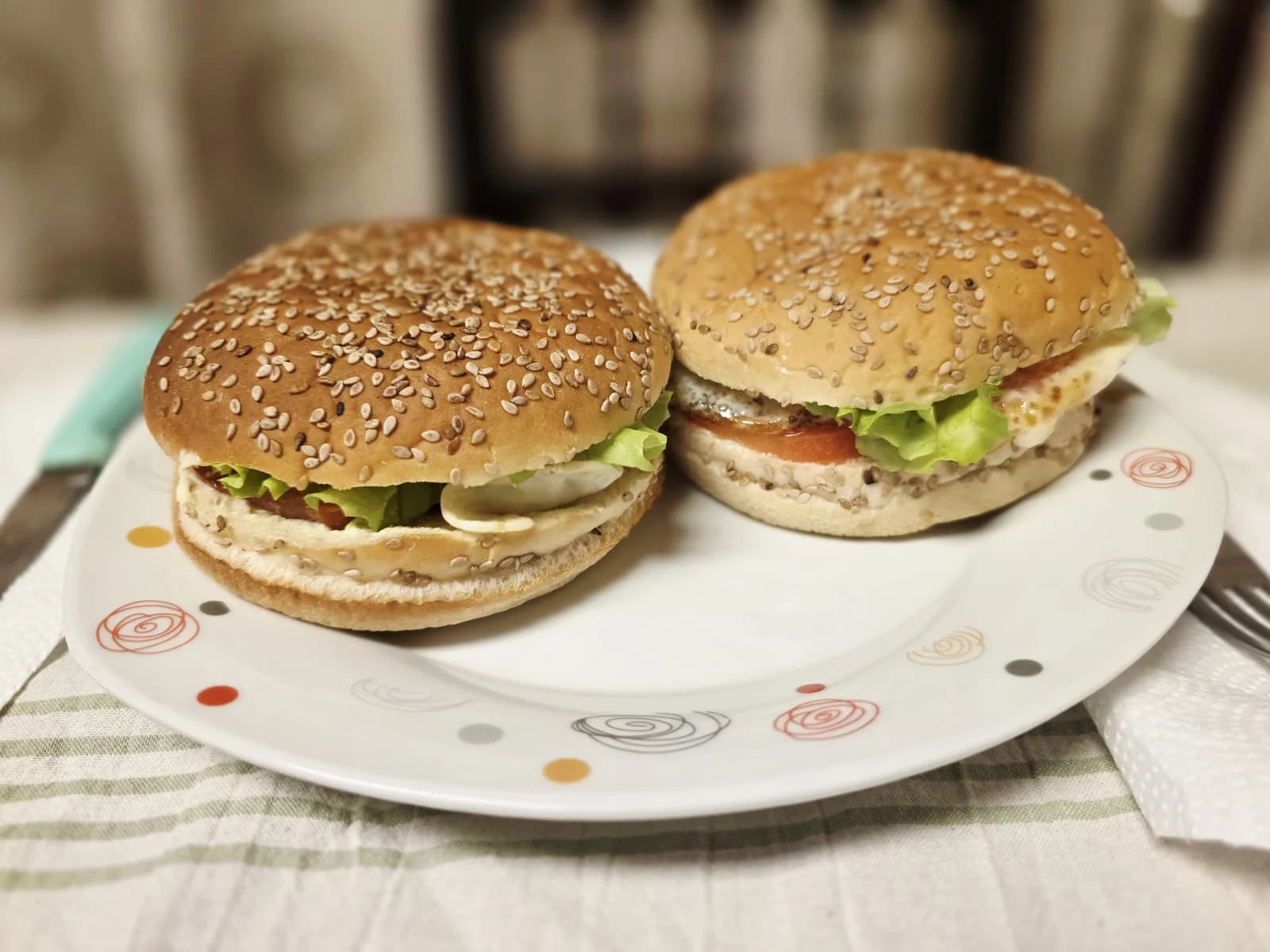
Recreate a tidy cafe presentation with correctly sized trays, grease-resistant sleeves and a realistic packaging test. This Kumora guide interprets the reference image; it does not claim to reproduce the original creator’s recipe or methods.
Before you start
- Food-contact packaging suitable for the serving temperature
- Grease-resistant sleeves and shallow trays
- Ruler and a sample assembled burger
- Plain paper for sizing mock-ups only
Measure the food before ordering
The reference works because the wrapper supports the lower burger while revealing the upper bun. Measure an actual assembled burger, including its height. Choose a tray that supports the base and a sleeve that contains the layers without squeezing out the filling.
Make a paper mock-up for sizing, then use food-contact packaging for service. Ordinary printed craft paper is not a substitute for a food-safe sleeve. Develop your own name and typography instead of copying the branding in the photograph.
Test moisture and grease
Drain wet toppings and control the sauce quantity. A sleeve can contain a burger but cannot rescue a soaked bun. Test your real combination of bread, filling, paper and outer box rather than judging the wrapper on an empty table.
Closed boxes trap more steam than open trays. Check the burger after a realistic service delay. Look for collapsed bread, leaking sauce and grease spreading through to the outside, then adjust the liner or assembly.
Wrap for the first bite
Put the seam underneath or toward the back and keep the front opening clear. The sleeve should hold the lower portion without making eating awkward. If it dents the bun, increase its size rather than forcing the burger into place.
For takeaway, prevent the burger from sliding around the outer box. Where practical, put sauces that soften the bread in a separate sealed container. Decorative picks should be visible and removable, not hidden in the wrapper.
Run a service rehearsal
Pack one order, carry it the expected distance and open it when a customer would eat it. Photograph both the wrapper and the food after the journey. Change one variable at a time: tray size, sleeve width, drainage or sauce placement.
This guide covers packaging, not cooking or commercial food-service requirements. Follow the handling procedures appropriate to your ingredients, and provide accurate ingredient and allergen information when serving other people.
The little details
- Test plain samples before buying custom printing in bulk.
- Keep ordinary inks and printed craft surfaces away from direct food contact.
Your questions, answered
Can this work for sliders?
Yes. Measure the actual sliders and use individual nests or dividers to stop them tipping into one another.
Why does the sleeve show grease?
It may lack sufficient grease resistance, or the filling may need better drainage. Test a food-contact liner designed for the application.
Made it? Let’s talk.
Share how your bake went, ask a question, or pass on a helpful tip. There’s a seat for you here.
A kind kitchen is a happy kitchen. Our community guidelines →

No comments yet. Be the first to say hello.